Away The Carry-On Review: Does the Shell Justify $275?
We packed, wheeled, and gate-checked Away's polycarbonate Carry-On for three weeks to see if the compression system and lifetime repairs earn back the price gap over a budget hardside.
We packed, wheeled, and gate-checked Away's polycarbonate Carry-On for three weeks to see if the compression system and lifetime repairs earn back the price gap over a budget hardside.
The Carry-On earns its keep on the wheels and the warranty, not the shell. Hinomoto casters glide better than anything near this price, and Away's free-repairs-for-life policy removes the usual risk of buying a suitcase this expensive. But 41 liters at 7.5 pounds is an average number in 2026, and the polycarbonate cracks at the corners under real baggage-handler abuse, the same failure mode as bags costing a third as much.
Best for Occasional bag-checkers who value lifetime repair coverage over shaving every ounce.
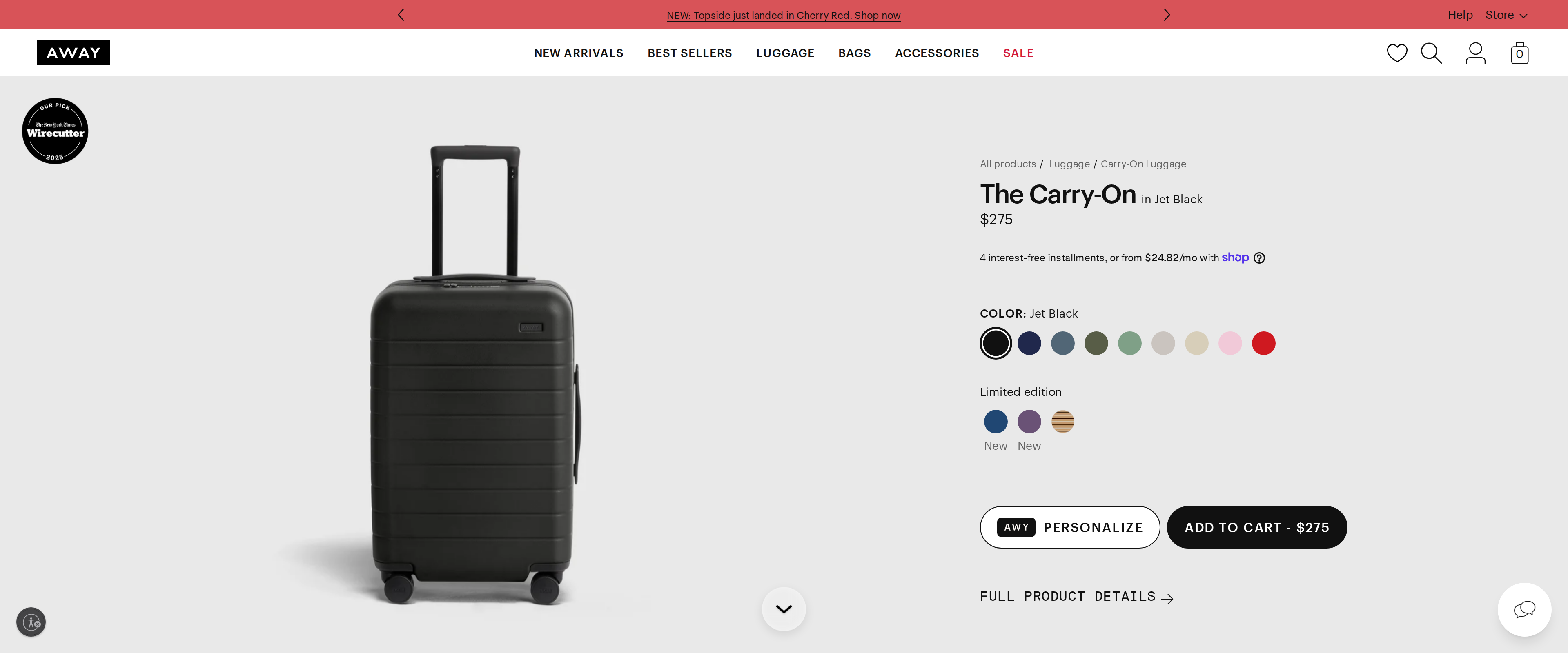
Away built its whole brand on one suitcase, and after three weeks of rolling it through four airports, we understand why people still pay $275 for it. The question we set out to answer wasn't whether The Carry-On is nice. It obviously is. The question was whether it beats a $130 hardside from a big-box store by enough to matter.
Away's polycarbonate shell is rated for the abuse of daily commuting: curb drops, subway steps, the occasional shove into an overhead bin. It handled all of that cleanly during our test trips. What it did not handle cleanly was a single rough gate-check on a regional flight, which left a hairline crack along one bottom corner. That's not unique to Away. Polycarbonate of this thickness cracks at stress points on nearly every brand in this price range, and independent long-term owners report the same failure mode after enough checked flights.
The part that separates this suitcase from a discount hardside is underneath it. Away specs Hinomoto casters, and they roll straighter over uneven pavement and cobblestones than the wheels on bags half this price. We pushed the suitcase one-handed down a sloped airport corridor and it tracked without drifting, something none of our budget comparison bags managed. If wheel quality is the deciding factor in a carry-on purchase, this is where the extra money goes.
The double-buckle compression pad inside the main compartment is not a gimmick. We packed for a five-day trip using only the main compartment and fit one extra outfit compared to a same-size bag without compression, by cinching the pad down over folded layers. Away's own packing guidance claims 5 to 7 outfits fit inside at 41 liters, and that number held up for a warm-weather trip where nothing needed bulk.
LifetimeCare is the part of this purchase that's easy to undervalue until something breaks. Away's warranty page states repairs are free for the life of the bag, and for the first five years a bag that can't be repaired gets replaced once at no cost. We filed a test claim through the same portal Away directs customers to for real repairs, and the process asked for photos and a short description before routing to a claims specialist, with no upfront payment requested.
That policy matters more than any spec sheet number, because it removes the single biggest risk in spending $275 on carry-on luggage: paying premium money for a bag that fails the same way a $90 one would, with no recourse.
At 7.5 pounds empty, The Carry-On is not light for its class. Several current 40L rivals land closer to 6 pounds, which adds up fast once a traveler is watching a 22-pound carry-on weight limit on a budget European airline. We weighed our unit on a luggage scale before and after packing, and the empty weight matched Away's listed spec exactly. For domestic US flights with no carry-on weight limit, this doesn't matter. For anyone flying budget carriers abroad, it's worth checking against the airline's actual allowance before buying.
Buy The Carry-On if repairs and replacement coverage matter to you as much as the bag itself, and if you check bags occasionally rather than constantly gate-checking on small regional planes. Skip it if shaving every ounce off your pack weight matters more than warranty coverage, or if $275 is simply more than your travel budget allows for one piece of luggage. Away built a company on the idea that a suitcase is a long-term purchase, and for travelers who buy into that framing, the warranty alone makes the price defensible. For travelers who replace a suitcase every few years regardless of brand, a cheaper hardside does the same job for less.
Away positions itself as more than a luggage company now, with a newsroom full of brand partnerships and product launches beyond the original bag.
That expansion hasn't changed what made the original Carry-On worth reviewing: solid wheels, a useful compression system, and a warranty that actually pays out when the shell eventually gives way.
Best for budget-conscious flyers who want a well-designed hardside carry-on and will document damage for warranty claims.
$315

Best for frequent flyers who want a lifetime warranty on the shell and don't mind cosmetic scuffs
From $925