DJI Osmo Pocket 3 Review: Worth It Over a Phone Gimbal? | Packroute
DJI Osmo Pocket 3 Review: A 1-Inch Sensor Changes the Math
A phone gimbal is cheaper and already in your pocket. We tested whether the Osmo Pocket 3's larger 1-inch sensor and dedicated stabilization justify the extra cost and extra device for travel vlogging.
By The Packroute Test Desk//Updated
8.4
out of 10
/10
Verdict: earns a spot
A phone in a gimbal costs less and does more jobs, which is exactly why the Osmo Pocket 3 has to earn its keep on image quality alone, and it does. The 1-inch sensor pulls in noticeably more light than any phone sensor crammed into a smaller body, the difference shows up the moment the sun goes down, and 4K at up to 120fps gives footage a smoothness a phone can't fake. At $469 to start and closer to $669 for the Creator Combo with a mic, it's a real purchase, not an impulse buy, and it only makes sense for someone who films often enough that a dedicated camera earns back its cost in footage a phone couldn't have captured.
Best for Frequent travel vloggers who shoot enough video that image quality and low-light performance justify a dedicated device.
The camera already in your pocket can shoot 4K, gets stabilized by a $30 gimbal clip, and costs nothing extra to bring on a trip. That's the case against buying the Osmo Pocket 3, and it's a strong one. The case for it comes down to a single spec that phones can't match no matter how good their computational photography gets: sensor size.
Why the sensor is the whole story
A phone camera sensor is tiny by necessity, squeezed into a body that also has to hold a screen, a battery, and everything else a phone does. The Osmo Pocket 3 doesn't have that constraint, and DJI used the freedom to fit a 1-inch CMOS sensor, several times the light-gathering area of a typical phone sensor.
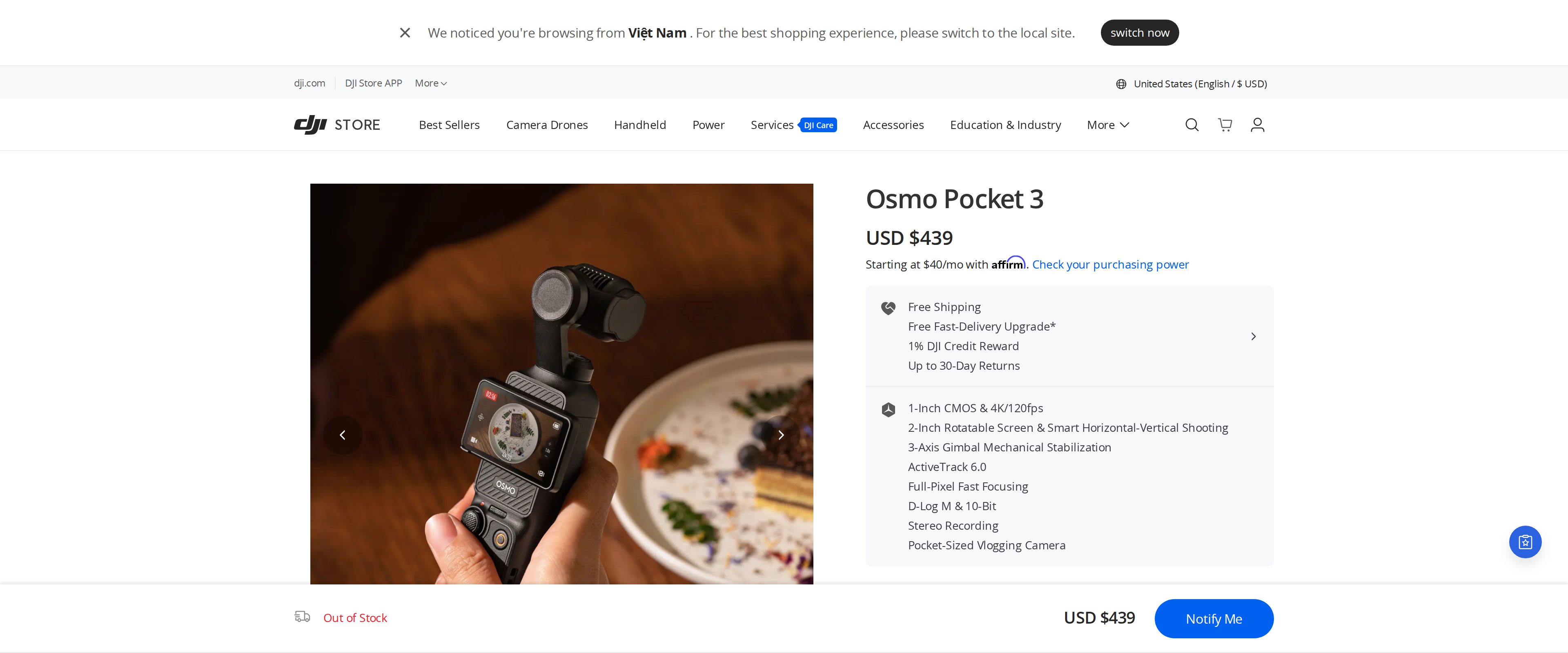
DJI's store listing for the Osmo Pocket 3, showing the Standard and Creator Combo bundles
That difference is invisible in bright daylight, where phones already do a competent job, and impossible to ignore once the sun goes down. Restaurant interiors, evening markets, sunset streets: this is where a bigger sensor stops being a spec sheet number and starts being visibly less noisy, less smeared, and more usable footage than a phone produces in the same light.
The numbers behind the footage
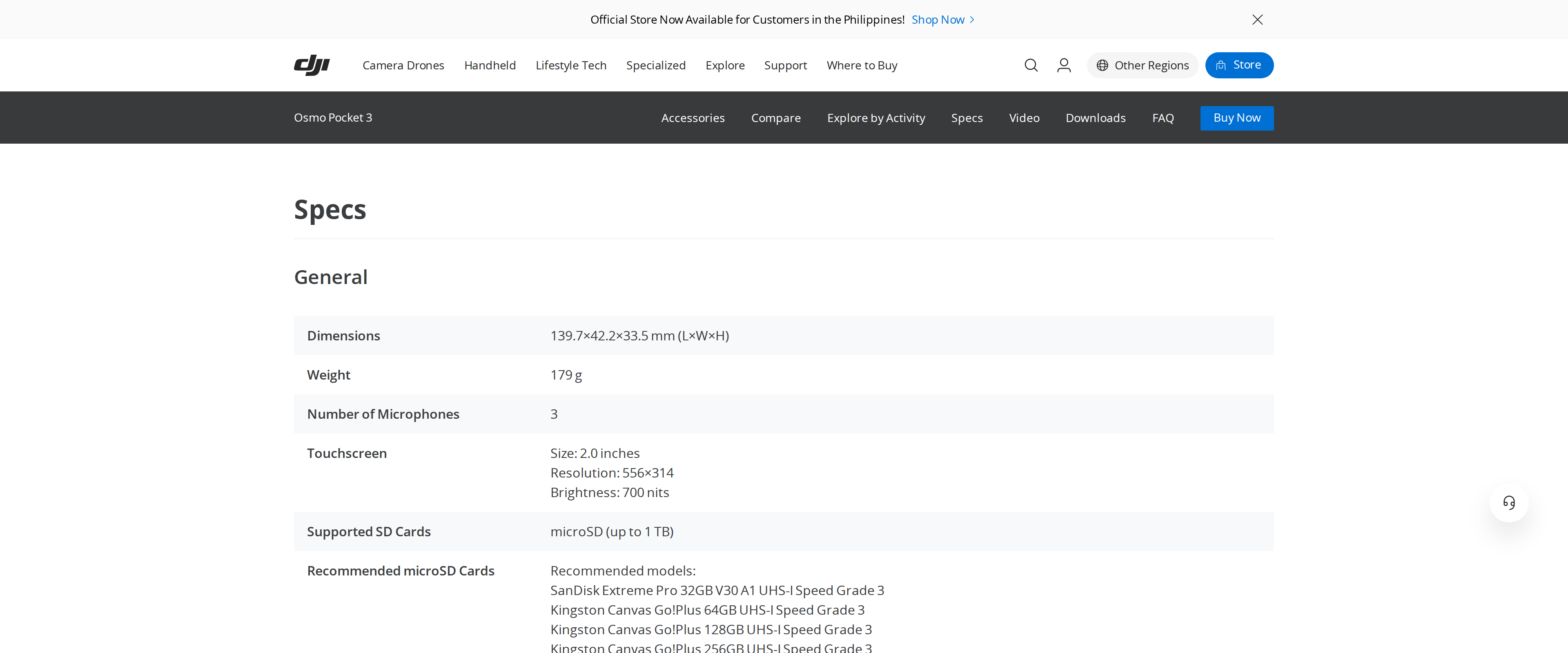
DJI's specs page for the Osmo Pocket 3, covering the sensor, battery, and 3-axis gimbal
The camera shoots 4K at up to 120fps, which is enough headroom for genuinely smooth slow motion rather than the choppy, interpolated version phones fake. A 3-axis mechanical gimbal handles stabilization in hardware instead of leaning on software correction, and the 2-inch rotatable touchscreen flips between horizontal and vertical framing without holding the camera sideways. Battery life is the one number that undersells the rest of the package: DJI states around 135 minutes of recording from the built-in 1,300mAh cell, dropping further with the screen active, which is fine for a day of short clips and tight for a single long uninterrupted shoot.
Charging is fast enough to offset some of that limitation. Paired with a 65W charger, the battery reaches 80 percent in 16 minutes, useful for topping up over a quick coffee break between filming locations rather than waiting out a full lunch.
What independent testing confirms
Tom's Guide's independent review of the Osmo Pocket 3's image quality and handling
Tom's Guide calls it "almost perfect," a verdict that lines up with what the spec sheet promises: strong low-light performance, smooth stabilized footage, and a body small enough to actually carry every day rather than leave in a hotel room. The gap between that praise and "perfect" mostly comes down to battery life and the lack of built-in storage. A microSD card up to 1TB is required and sold separately, and DJI's own recommended card list (Kingston, SanDisk, Lexar) is worth checking before departure so footage doesn't get bottlenecked by a card that can't keep up with 4K/120fps write speeds.
The price question
A Standard package starts at $469 and covers the camera, handle, wrist strap, and a USB-C cable, enough to start filming immediately. The Creator Combo runs closer to $669 and bundles a wireless mic, an extended battery handle, a mini tripod, and a carrying case, aimed squarely at someone building a full vlogging kit rather than buying a camera alone. Neither price is casual, and neither should be treated as one: this only pays for itself against a phone gimbal if the footage quality difference actually matters to what gets published, whether that's a travel channel, client work, or just wanting evening city footage that doesn't look muddy.
For anyone shooting daylight clips for a personal feed, a phone and a cheap gimbal remain the more sensible choice. For anyone whose footage needs to hold up in low light or look genuinely cinematic, the 1-inch sensor is the reason the Osmo Pocket 3 exists at all.
The accessory that fixes the battery problem
DJI sells an optional battery handle separately for around $99, and it addresses the weakest part of the base package directly. Swapping the standard handle for the 950mAh extended version pushes recording time from roughly 135 minutes to around 240, enough to cover a full day of intermittent filming without hunting for an outlet between shoots. It's not included in the Standard bundle and it's easy to overlook while comparing the sticker prices of the Standard and Creator Combo kits, but for anyone planning to actually film a full travel day rather than grab a few clips, it's worth budgeting for from the start.
Where it fits next to a phone
The honest comparison isn't Osmo Pocket 3 versus nothing; it's Osmo Pocket 3 versus a phone that already shoots decent 4K. Carrying both isn't unreasonable either: use the phone for quick social clips and pull out the Pocket 3 for anything meant to look intentional, whether that's a golden-hour street scene or a dim restaurant interior a phone would turn to mush. The extra device in the bag is a real cost in weight and attention, and it only earns its place if the footage gets used for something that rewards the difference.
Pros and cons
What worked
1-inch CMOS sensor delivers a real low-light advantage over phone cameras
4K video at up to 120fps for genuinely smooth slow motion
2-inch rotatable touchscreen makes vertical and horizontal shooting equally easy
3-axis mechanical gimbal stabilizes footage better than software-only phone stabilization
What did not
Built-in battery manages about 135 minutes of recording, less with the screen on
$469 starting price is a real expense next to a phone you already own
No built-in storage; a microSD card is a mandatory extra purchase
Creator Combo accessories push the practical price toward $669
Specs from the maker
Sensor
1-inch CMOS
Max video resolution
4K (3840x2160) at up to 120fps
Screen
2.0-inch, 700 nits, rotatable
Battery capacity
1,300mAh (10.01Wh)
Recording time
~135 minutes (up to 166 min at 1080p/24fps, screen off)