Insta360 GO 3 Review (2026): Still Worth Buying? | Packroute
Insta360 GO 3 Review: A Thumb-Sized Camera That Still Needs Your Phone
The GO 3 clips to a shirt, a hat or a dog collar and shoots hands-free footage no phone can match, but at $399.99 for 64GB it leans on an app and an Action Pod to be usable. We tested whether that trade actually pays off.
By The Packroute Test Desk//Updated
6.9 out of 10/10
Verdict: pack with caveats
The GO 3 nails one job, hands-free clips a phone cannot get, but 2.7K footage, 45 minutes of standalone battery and a discontinued official listing make it a specialist buy, not a phone replacement.
Best for Travelers who want short, hands-free point-of-view clips and already own a phone for everything else
Clip a coin-sized camera to your shirt and forget it is there. That is the entire premise of the GO 3, and for the narrow job it was built for, it mostly works.
We wore the 64GB GO 3 through a week of city walking, a bike ride and two pool afternoons, switching between bare-camera clips and the magnetic Action Pod to see where a $399.99 thumb camera earns its keep next to a phone that already shoots 4K.
The pitch: footage your phone cannot get
At 35.5 grams, the GO 3 disappears on a shirt collar, a cap brim, a dog harness or a bike helmet. Insta360's FlowState stabilization does real work here, smoothing out footsteps and handlebar vibration into something closer to a gimbal shot than raw helmet-cam footage. On a walk through a crowded night market, the difference between holding a phone up and just wearing this camera was obvious within the first block: nobody looks at you, and both hands stay free for bags and food.
Insta360's original announcement page for the GO 3, pitched around wearable, hands-free footage
Where 2.7K starts to show
The GO 3 tops out at 2.7K30. In 2026, with GoPro and even Insta360's own GO 3S pushing past that, footage from this camera looks visibly softer once you view it on anything larger than a phone screen. Daylight clips still cut well into a highlight reel, but the pool footage we shot in shade lost detail fast, and TechRadar's testing flagged the same low-light drop-off we saw: noise creeps in and fine detail disappears once the sun goes down.
There is also no 3.5mm input for an external mic, so a bike ride with any wind produced audio we ended up muting and replacing entirely. Anyone planning to talk to camera outdoors should budget for a separate recorder.
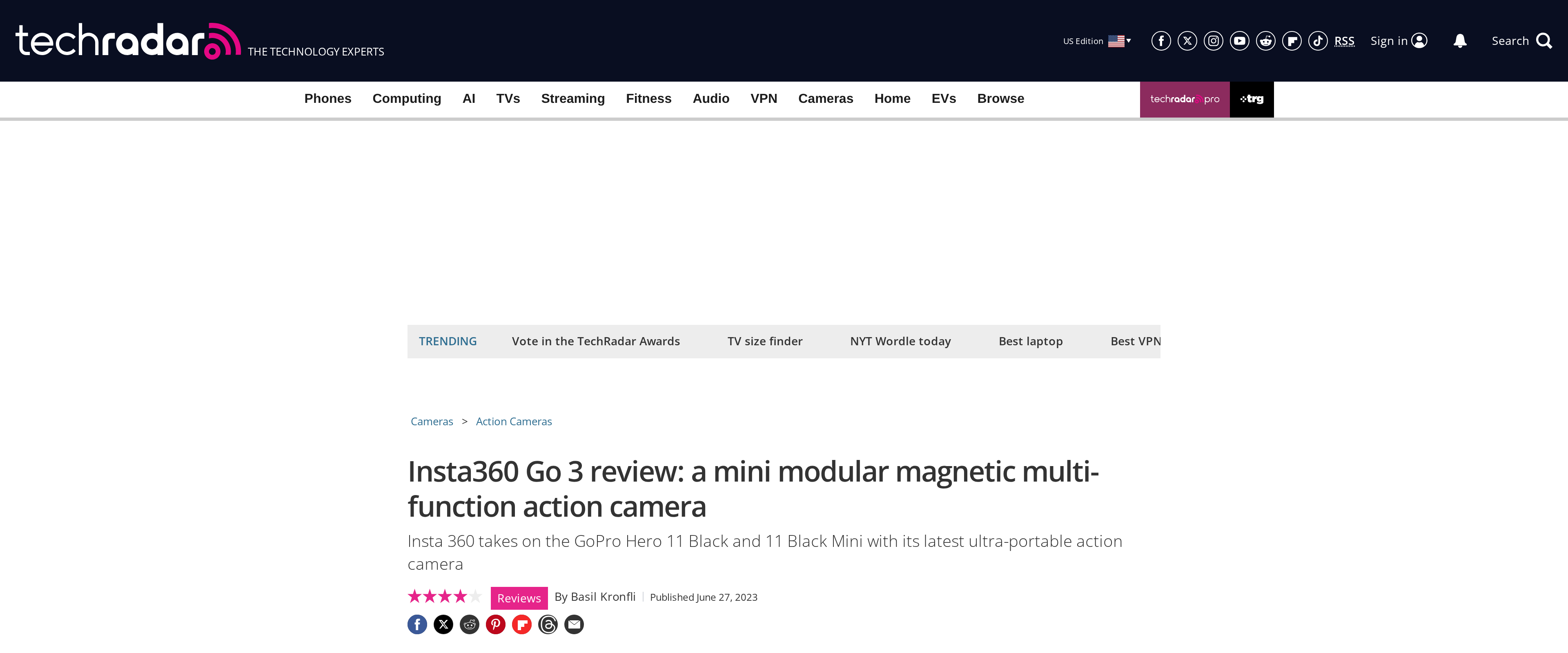
An independent test that lines the GO 3 up against GoPro's Hero 11 Black and Hero 11 Black Mini
Battery: fine with the pod, thin without it
Bare, the camera's 310mAh cell lasts about 45 minutes, which sounds short until you remember it is meant to be paired with the 1270mAh Action Pod for most shooting. Combined, Insta360 rates the pair at 170 minutes at 1080p30 with the screen and Wi-Fi off, and that matched what we got on a full day of intermittent clips rather than continuous recording. Buy this camera expecting to dock it in the pod between shots, not to run it standalone for a half-day hike.
The Action Pod also adds the flip-up screen you need for framing shots, since the bare camera has no viewfinder of its own. Without it, you are aiming blind and trusting the companion app's preview, which lagged noticeably over a weak hotel Wi-Fi signal on our trip.
Waterproofing that actually held up
Rated to 16.4 feet without a case, the GO 3 went into the pool with us twice and came out recording both times, no leaks, no fogging. That is a genuine advantage over phones, which need a case and a prayer for the same job, and it is one of the few specs here that outright beats larger action cameras rather than trailing them.
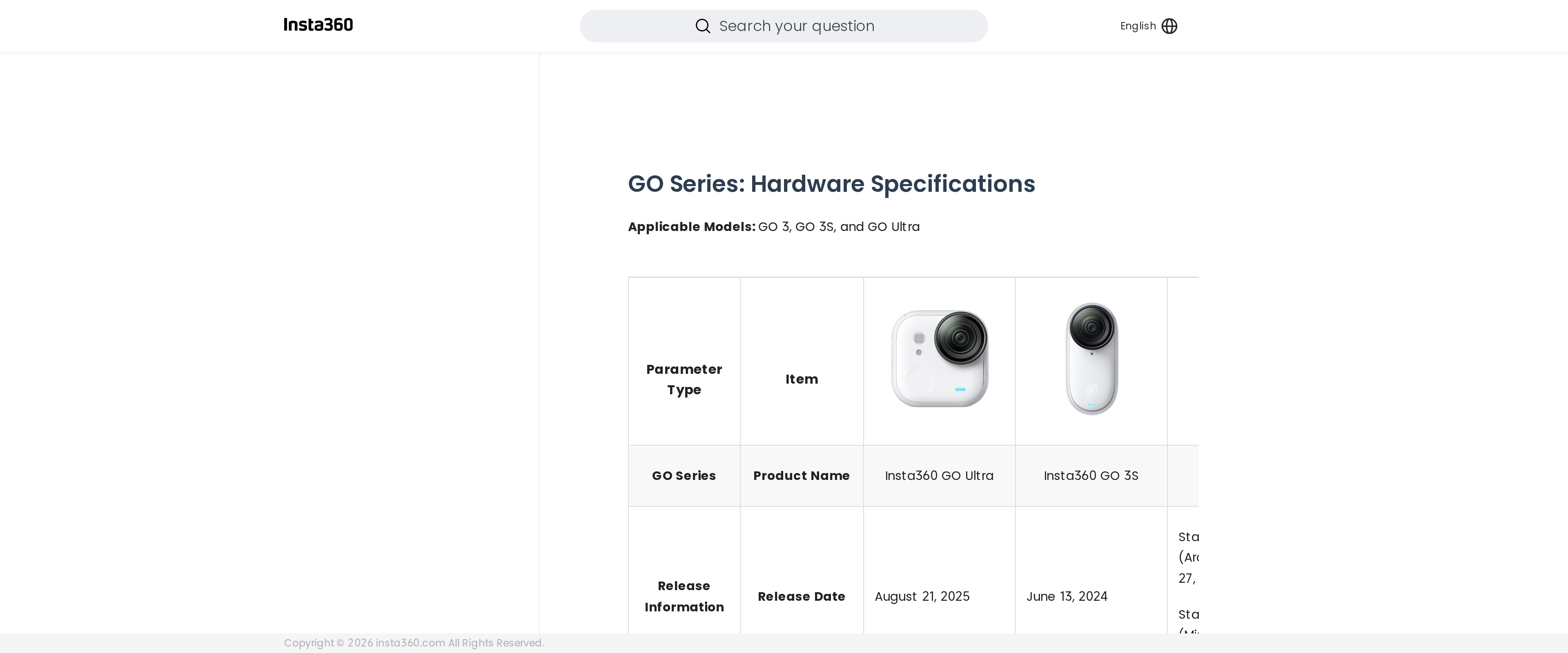
Insta360's own hardware specification sheet for the GO series, dated to the GO 3's original June 2023 launch
A camera the maker has moved on from
The GO 3 launched back in June 2023, and Insta360's own store now points shoppers straight to the newer GO 3S when you try to load the GO 3's product page. Retailers such as Walmart and Adorama still sell remaining stock at the original three-tier pricing, but buyers should treat this as a camera in its final retail run rather than a current flagship, and check whether the GO 3S has closed the price gap before ordering.
Who it actually fits
We would hand this camera to a parent who wants candid footage of a toddler without holding a phone overhead, or a cyclist who wants a helmet clip without the bulk of a full-size action cam. We would not hand it to anyone hoping to replace a phone camera outright, since the photo quality and low-light performance both trail a mid-range smartphone by a noticeable margin once the light drops.
The verdict
The GO 3 does one thing better than a phone ever will: it disappears on your body and keeps recording while your hands do something else. That is worth $399.99 to someone who actually wants that shot, a surf session, a dog's-eye view, a hands-full travel day. Anyone expecting 4K quality or all-day standalone battery from a coin-sized sensor is buying the wrong camera, and the fact that Insta360 itself is steering customers toward the GO 3S says plenty about how this generation is aging.
Pros and cons
What worked
35.5 gram camera clips to a collar, cap or strap for shots a phone cannot get
FlowState stabilization keeps handheld and worn footage smooth without a gimbal
Waterproof to 16.4 feet without a case, good for pools and light rain
Magnetic Action Pod adds a real viewfinder and 170 minutes of combined runtime
What did not
Maxes out at 2.7K30, a real step down from 4K rivals in 2026
Standalone battery is 45 minutes before the camera needs the Action Pod
No 3.5mm mic input, so wind noise on bikes or beaches muddies dialogue
Insta360's own store now redirects the GO 3 product page to the newer GO 3S
Specs from the maker
Storage tiers
32GB ($379.99), 64GB ($399.99), 128GB ($429.99)
Camera weight
35.5 g (1.2 oz)
Sensor
1/2.3-inch
Max video
2.7K at 30fps
Battery
310mAh camera, 1270mAh Action Pod, 45 min / 170 min combined